

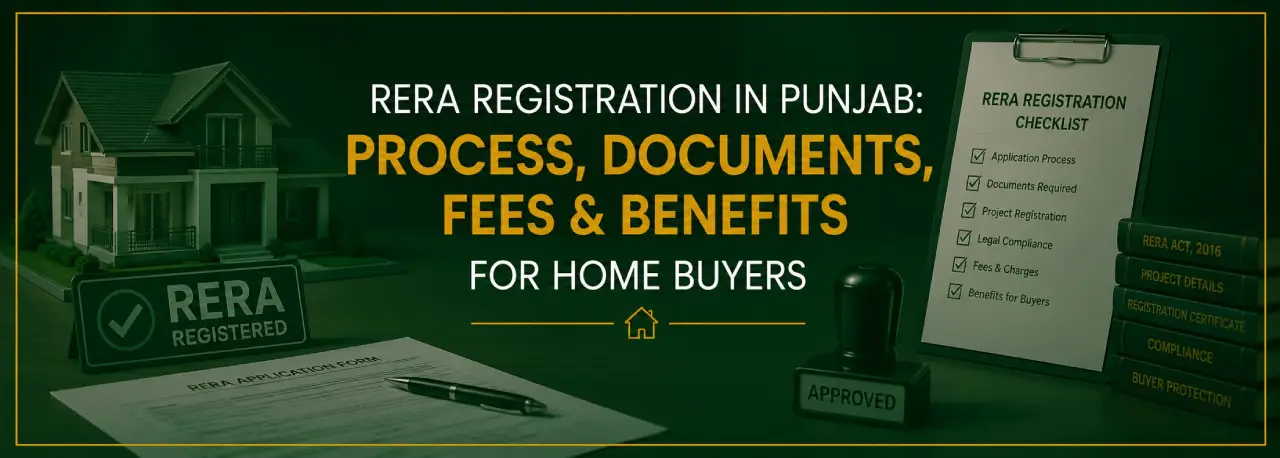
Buying a home is one of the biggest decisions most people make in their lifetime. It involves years of savings and trust in a builder you may have never worked with before. This is why RERA Registration matters so much. It pushes developers to disclose real project details instead of vague promises. For any buyer researching apartments or upcoming developments, understanding RERA is the first step toward a safer decision, since it creates transparency between developers and buyers that simply didn’t exist before.
What Is RERA Registration?
RERA stands for the Real Estate (Regulation and Development) Act, a law designed to bring order and accountability to India’s real estate sector. Under this law, most residential and commercial projects above a certain size must register with the state’s RERA authority before they can be advertised or sold.
Registration means the developer has submitted verified details about the project, including land ownership records, approved layout plans, promoter information, and expected completion timelines. Once registered, the authority issues a unique number buyers can use to track the project’s status.
For home buyers, this shifts some power back into their hands. Instead of relying purely on brochures or sales pitches, buyers can check official records and compare them with what they’re being told.
What Is RERA Approved?
Many buyers wonder what is RERA approved when agents or developers use the term. In simple terms, a project is considered RERA registered when it has been formally listed with the state RERA authority and has met the disclosure requirements under the Act.
Be careful here. “RERA approved” isn’t the same as other government approvals like building plan sanctions or environmental clearances. Registration confirms the promoter has disclosed required project information, not that every other regulatory approval has been granted. Never assume a project is compliant just because a salesperson mentions RERA. The only reliable way to confirm this is checking the project directly on the official portal.
Why Is RERA Registration Important for Home Buyers?
RERA registration brings several practical benefits to buyers:
- Transparency: Developers must publicly disclose project layouts, timelines, and land details.
- Promoter accountability: Buyers can see who is actually behind the project.
- Possession commitments: Registered projects must state expected completion dates, and delays carry consequences.
- Buyer protection: Buyers have a formal complaint channel if commitments aren’t met.
- Standardized information: Registered projects follow a similar disclosure format, making comparison easier.
This gives buyers a reference point to return to if something doesn’t match what was promised.
RERA Registration Process in Punjab
The registration process follows a fairly consistent structure across Indian states, including Punjab. Here’s a simplified overview:
- Project eligibility: The promoter checks whether the project falls under the size and type requiring registration.
- Collection of information: Land title, project layout, and promoter background are compiled.
- Online application: The promoter applies through the Punjab RERA online portal.
- Document submission: Supporting documents are uploaded along with the application.
- Verification: The authority reviews the submission for completeness and accuracy.
- Registration approval: Once satisfied, the authority approves the registration.
- Number issued: A unique RERA registration number is generated for future verification.
This is meant to happen before a project is marketed to the public, so buyers should ideally see this number before making any commitment.
Documents Required for RERA Registration
Exact requirements can vary by project type and applicable Punjab RERA rules, but most registrations typically involve these broad categories:
- Promoter identity and company details
- Land ownership or title documents
- Approved building or layout plans
- Necessary development permissions
- Detailed project specifications
- Financial or project cost details
- Development and completion timelines
- Other project-specific approvals
Since requirements differ by size, location, and project type, buyers and developers should confirm the current checklist directly with the Punjab RERA authority.
RERA Registration Fees in Punjab
RERA registration fees aren’t fixed across all projects. They depend on factors like the type of project, its size, and applicable state regulations at the time of application. Because these figures change and vary case by case, this article won’t state a specific fee amount. Buyers and developers should always verify current fee details from the official Punjab RERA authority before proceeding.
How to Do a RERA Registration Check Before Buying a Property
A proper RERA registration check should be a non-negotiable step before signing anything. Here’s a practical way to approach it:
- Note the project’s exact official name as advertised.
- Ask the developer for the RERA registration number.
- Search the official Punjab RERA portal using the project name or number.
- Check the promoter’s registered details against what you’ve been told.
- Confirm the registered location matches the actual site.
- Review the declared possession or completion date.
- Compare verbal claims with the official disclosures.
- Look through the uploaded approvals and documents.
This check usually takes just a few minutes but can save buyers from years of disputes. Skipping it is one of the most common and costly mistakes in property buying.
What Is a RERA Registration Number and Why Does It Matter?
The RERA registration number is a unique identifier assigned to a registered project. Think of it like the project’s official ID card. Every legitimate, registered project should carry one, and this number lets buyers pull up its disclosed details directly from official records.
Buyers should always match the number given by the developer with the one listed on the official portal. If the numbers don’t match, or the project doesn’t appear at all, that’s a serious red flag worth investigating.
RERA Registration and Property Buying in Chandigarh & Mohali
The Chandigarh-Mohali region has seen steady interest from home buyers, thanks to its planned infrastructure and connectivity. Whether you’re looking at property in Chandigarh or property in Mohali, verification matters given how many projects are actively marketed in this belt.
Location-specific checks matter too. A project’s registered address should match its actual location, and buyers should confirm this rather than relying solely on promotional maps. Verifying project details independently, rather than relying solely on advertisements, puts buyers in a stronger position when negotiating or finalizing a purchase.
Common Mistakes Home Buyers Should Avoid
- Skipping the RERA registration check entirely
- Not verifying the registration number against official records
- Assuming any government-sounding approval means RERA registration
- Relying only on verbal assurances from sales teams
- Not reviewing full project details, including layout and timelines
- Signing agreements without reading the fine print
- Failing to cross-check details with the official portal
Each of these is avoidable with a bit of patience and a direct check on official records.
A Simple RERA Verification Checklist
Before finalizing a property, confirm you have:
- The exact project name
- The promoter’s registered name
- The RERA registration number
- The registered project location
- Current registration status
- Declared completion or possession date
- Listed approvals and documents
- Promoter contact and background information
Looking for Property in Chandigarh or Mohali?
If you’re exploring property in Chandigarh or property in Mohali, it helps to work with developers who are transparent about project details. Beverly Golf Avenue is one such residential development in the Mohali-Chandigarh region, offering 3 BHK and 4 BHK apartments for buyers exploring premium housing in this belt. As with any property decision, we’d encourage you to independently verify the RERA registration number and project details through official records before making a final call. You can learn more at beverlygolfavenue.com.
FAQs
1. What is RERA Registration?
It’s the process where developers formally list their projects with the state RERA authority, disclosing land ownership, approved plans, and completion timelines.
2. Why is RERA registration important for home buyers?
It gives buyers verified project information, promoter details, and possession commitments, reducing reliance on sales claims alone.
3. How can I perform a RERA registration check?
Visit the official Punjab RERA portal and search using the project’s name or its registration number.
4. What is a RERA registration number?
It’s a unique ID assigned to a registered project, letting buyers verify disclosures and confirm authenticity.
5. What is RERA approved property?
Generally, a project formally registered with the state RERA authority, though it’s not the same as other separate government approvals.
6. Is RERA registration mandatory for every real estate project?
Most residential and commercial projects above a certain size require it, though thresholds can vary. Buyers should confirm applicability case by case.
7. What documents should buyers check before purchasing a RERA-registered property?
Review the promoter’s details, land title documents, approved plans, and declared timelines on the official portal.
8. Can I verify a property in Mohali or Chandigarh through RERA records?
Yes. Search the official Punjab RERA portal using the project name or registration number to verify details for this region.
Conclusion
Buying a home involves a lot of trust, but verified facts, not marketing promises, should back that trust. Understanding RERA Registration, knowing how to check a project’s status, and reviewing official documents can protect buyers from costly mistakes. Before you commit to any property, take the time to verify the details independently and make an informed decision rather than a rushed one.