

When you’re building or buying a home in India, one thing is almost guaranteed. Someone in the family is going to ask, “Vastu theek hai na?” And honestly, that question deserves a real answer, not just a nod.
A good Vastu Shastra home plan isn’t about blind faith. It’s about designing a home that feels comfortable, breathable, and balanced. Where light comes in at the right time, rooms are used for the right purpose, and the family actually feels at ease. That’s what it comes down to.
Why a Vastu Shastra Home Plan Matters Today
Modern Indian families are managing a lot under one roof. Work from home, kids’ online classes, elderly parents, weekend guests, and still trying to keep the house peaceful. The way your home is laid out either supports all of that or quietly makes everything harder.
Vastu Shastra for the home is an ancient design system built around directions, natural light, airflow, and spatial balance. A lot of what it recommends lines up perfectly with what good architects say today. It is not magic. It is logic that has been tested across generations and still holds up.
When your home is planned well, you notice it in small ways. The bedroom actually feels restful. The kitchen doesn’t feel cramped. The living room has a natural energy to it. That is what Vastu Shastra for home design is trying to give you.
Core Principles You Should Know
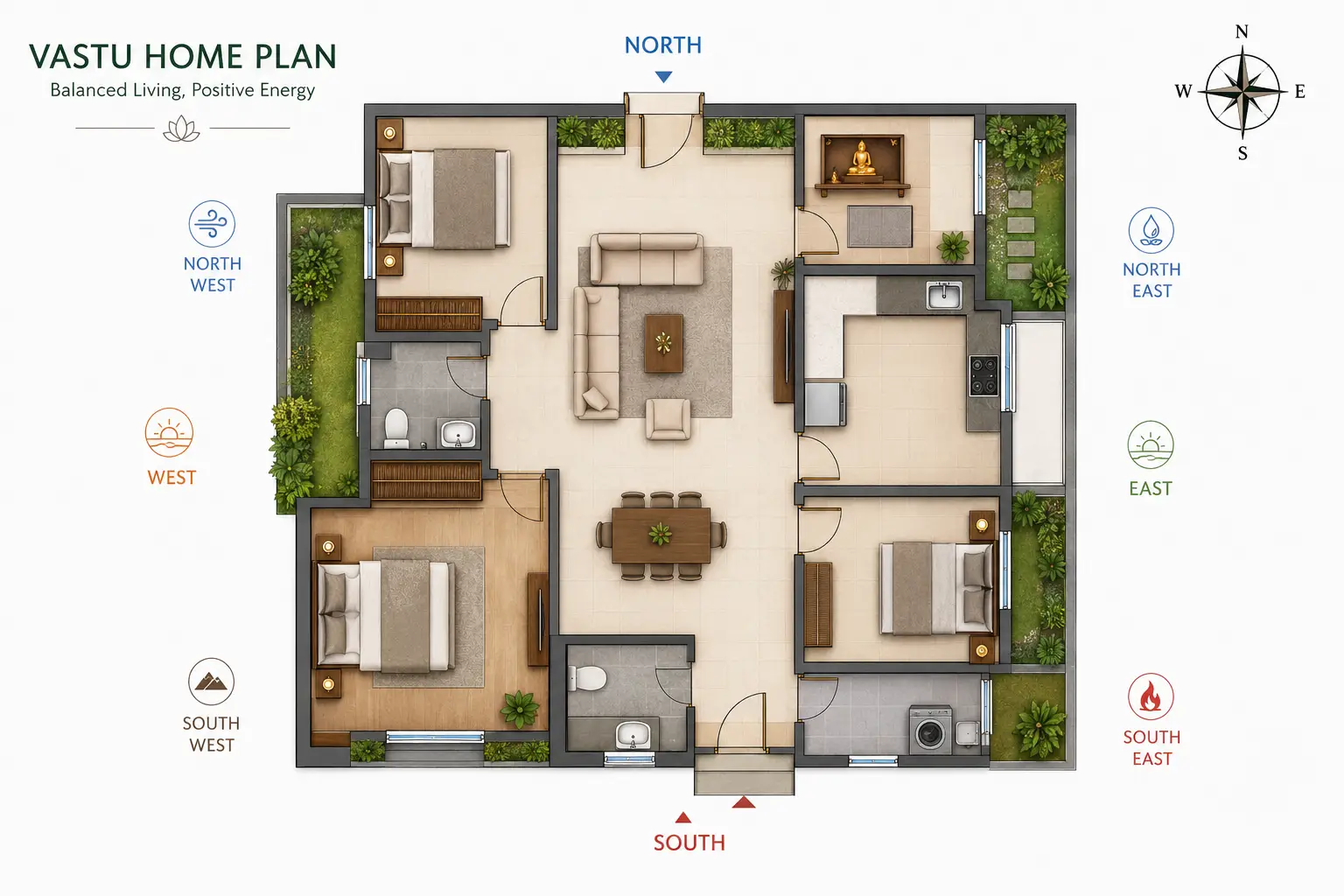
Directions matter. Each direction carries a specific purpose in Vastu. North and east are growth zones, ideal for living rooms, entrances, and study areas. Southeast is the fire zone, which is why kitchens belong there. Southwest is the most stable and grounded corner, making it right for the master bedroom.
Light and airflow are everything. Vastu favours homes that receive morning sunlight from the east and northeast. This is not just tradition. Morning light genuinely improves mood, sleep quality, and energy levels throughout the day. Good cross-ventilation keeps the home cool and reduces dependence on ACs.
Keep the centre open. The middle of your home, called the Brahmasthana, should stay uncluttered and open. Whether it is a central hall, a courtyard, or just a free-flowing living space, keeping it clear makes the entire house feel more breathable and light.
Clutter is both a Vastu problem and a daily life problem. Blocked corners, things stuffed under beds, broken items that nobody has fixed yet. These are Vastu defects, but more than that, they add low-level stress to everyday life. A clean and well-organised home and a Vastu-correct home are almost always the same thing.
Room by Room Vastu Guide
Main Entrance
North, northeast, or east-facing entrances are considered the best. They invite morning light and are the most auspicious in Vastu Shastra. South-facing entrances are common in city plots and can be handled well with the right threshold design and lighting. Just make sure you are not placing a toilet or a staircase directly in front of or above the entrance.
Living Room
The north or east side of the home works best for the living room. Windows on these walls let in good natural light. Heavy furniture like sofas and cabinets should sit along the south or west walls so they do not block the natural flow of light and air across the room.
Kitchen
The southeast corner is ideal because it matches the fire element in Vastu. The person cooking should face east. Never put the kitchen in the northeast corner, which is the sacred zone of the home, and never place it right next to or facing a bathroom.
Master Bedroom
Southwest is always the right choice for the master bedroom. It is the most grounded and stable zone in any home. Sleeping with your head pointing south gives you deeper and more restful sleep. The northeast corner is too energetically light for a bedroom, so avoid placing the master bedroom there.
Children’s Room
West or northwest works well for children. Studying while facing east or north is the Vastu recommendation, and it is also practical because that is where natural light comes from during daytime hours.
Bathroom and Toilet
Northwest or west are the safe zones for bathrooms. Keep them completely away from the northeast corner. The toilet seat should face north or south, not east or west.
Pooja Room
Northeast is the right spot, no exceptions. This corner gets the first light of the morning and holds the highest spiritual energy in any home. Keep the pooja room slightly elevated, clean at all times, and away from bedrooms and bathrooms.
Vastu for Apartments
Most urban families today live in flats, not open plots. You cannot break walls or change the building structure. But Vastu Shastra for home design still applies in a practical way.
Think about these things in your flat. Which direction does your entrance face? Is the kitchen placed in a reasonable zone within the unit? Where is your head pointing when you sleep? Is your pooja corner sitting in the northeast?
These are all within your control. Furniture arrangement, paint colours, which room you use for sleeping versus working, and lighting placements. All of it counts and adds up.
For villas and independent homes, building with a proper Vastu Shastra home plan from the start is the smartest move. Getting the kitchen, bedroom, and entrance right during construction is far easier and cheaper than correcting them five years later.
Common Mistakes Indian Families Make
- Putting the kitchen in the northeast corner, which is very common in urban flats
- Main entrance facing south, with no corrective measures taken
- The master bedroom is placed in the northeast corner of the home
- The overhead water tank is sitting in the northeast
- Mirror placed directly facing the bed
- The northeast corner turned into a storage area, or was left completely blocked
Easy Fixes Without Any Renovation
You do not need to touch a single wall to improve Vastu Shastra at home. These small adjustments are practical, and they genuinely shift how a space feels.
- Change your sleeping direction. Head facing south or east is the Vastu recommendation, and it costs nothing.
- Clear the northeast corner. Remove stored items, add a small indoor plant or a bowl of water, and keep it that way.
- Fix everything broken. Leaking taps, cracked tiles, broken door handles, flickering tube lights. Fix them quickly because these things matter more than people realise.
- Use colour with intention. Light blue or green in the northeast, warm yellows in the southeast kitchen area, earthy and grounded shades in the southwest bedroom.
- Add a wind chime near the entrance. A small and simple way to activate energy at the main door.
- Place mirrors on the north or east walls. This amplifies light in the more auspicious directions and makes smaller rooms feel more open.
Where Modern Design and Vastu Actually Meet
This is the part most people overlook. Today’s best home design trends already follow Vastu logic without even calling it that.
Open floor plans naturally keep the Brahmasthana clear. Large east-facing windows are a hallmark of luxury modern homes, and they are exactly what Vastu has always recommended. Biophilic design, which means bringing plants, water elements, and natural materials indoors, directly echoes the Vastu principle of balancing the five elements in your living space.
Minimalist interiors with clean lines and proper storage solutions address the clutter issue that Vastu has been pointing out for centuries. Smart home features like automated lighting, air purifiers, and good ventilation systems support the same goals that Vastu sets out for a healthy living environment.
Ancient wisdom and modern architecture are not at odds. The best homes built today are the ones where both are quietly working together.
Create Your Dream Home with Beverly Golf Avenue
If you are looking for a home where thoughtful design and natural living come together in one place, Beverly Golf Avenue is worth a serious look. Open green spaces, natural ventilation, carefully planned layouts, and surroundings that support a calm and comfortable family life. The community is built with the kind of spatial balance that makes a home feel genuinely good to live in every single day.
For families who want modern amenities without sacrificing peace, openness, and quality of life, it is the kind of address where Vastu and contemporary living naturally come together without compromise.
FAQs
Which direction should the main entrance face?
North, northeast, or east are the best choices. They bring in morning sunlight and positive energy. South-facing entrances can be managed with good design decisions.
Can Vastu work in an apartment?
Yes. Furniture placement, sleeping direction, kitchen zone, and pooja corner are all within your control, even in a flat.
Where should the kitchen be?
Southeast is ideal. Northwest works as a backup. The cook should always face east. Avoid placing the kitchen in the northeast or next to a toilet.
What is the best direction for the master bedroom?
Southwest. It is the most stable and grounded zone in the home. Sleeping with your head facing south gives the most restful sleep.
Where should the pooja room be?
Northeast, always. Idols should face west, so you pray while facing east. Keep it clean and away from bedrooms and bathrooms.
Is Vastu scientific or just a tradition?
The core ideas, natural light, good airflow, directional orientation, and open central spaces, all match up with modern architecture and environmental design principles.
What is the easiest Vastu fix I can do today?
Clear the northeast corner of your home and shift your sleeping direction. Both are free, take very little time, and make a noticeable difference in how the space feels.
Final Thoughts
Vastu is not about chasing perfection in every corner of your home. It is about making thoughtful choices when you plan, build, or arrange your living space. A well-planned Vastu Shastra home plan helps your family live with more comfort, better light, and less daily friction.
Start with the small changes today. And when you are ready to buy or build your next home, make sure Vastu is part of the conversation from day one. Your home should work for you, and with the right planning, it absolutely will.